The visual references behind great advertising
You are three days from a pitch. The mood is completely clear in your head: the palette, the quality of light, the feeling of the first frame. But every time you reach for a reference, you end up on Pinterest, scrolling through boards built by other agencies for other pitches. The deck starts to look like everyone else's. The best advertising references come from cinema, not stock. Flim gives creative teams in advertising searchable access to over one million cinematic frames, and the tools to go from reference to generation without switching platforms.

Where commercial directors actually look
Walk into a production company before a big pitch and you will not find a team scrolling stock sites. You will find someone three monitors deep in Kubrick, in Terrence Malick, in a 1970s Spaghetti Western whose name they half-remember but whose colour palette they have never forgotten. That is where the real work happens, in the accumulated visual language of cinema.
Commercial directors have always known this. The grammar of advertising, the way light falls across a face, the space left in a frame before the subject enters, the particular quality of grain that makes a shot feel expensive without looking polished, was learned from films, not from briefs. Directors like Michel Gondry and Jonathan Glazer are public about it: their references come from cinema because cinema is the most developed visual language available. Advertising borrows from cinema, and the best advertising borrows consciously.
The problem is access. Film stills and scene references are scattered across the internet in formats that make creative work slow and unreliable. A Google Images search for "Tarkovsky colour palette" returns a mixture of useful frames, fan edits, and random noise. Pinterest gives you what other people have already saved, filtered through the algorithm's idea of what you probably want to see. Neither tool lets you search by mood, by era, by lighting style, or by the particular emotional register a scene produces. Neither tool was built for this workflow.
The reference is in your head. The problem is getting it out.

The visual language of a winning pitch
There is a version of a pitch deck that wins the room before a single word is spoken. The references are so precisely right, so specific to the feeling the client is trying to create, that everyone around the table can see the film in their head. Then there is the other version: the one that looks like the last three campaigns in the category, because the references were pulled from the same stock sites and mood board templates everyone else uses.
The difference is not budget. It is not even talent. It is the quality of the visual thinking that happened before the first word was written. A creative director who can show the exact cinematographic register they are working in the colour temperature, the focal length, the rhythm of the editing) is not describing a campaign. They are showing it. References from cinema signal original visual thinking. References from stock do not.
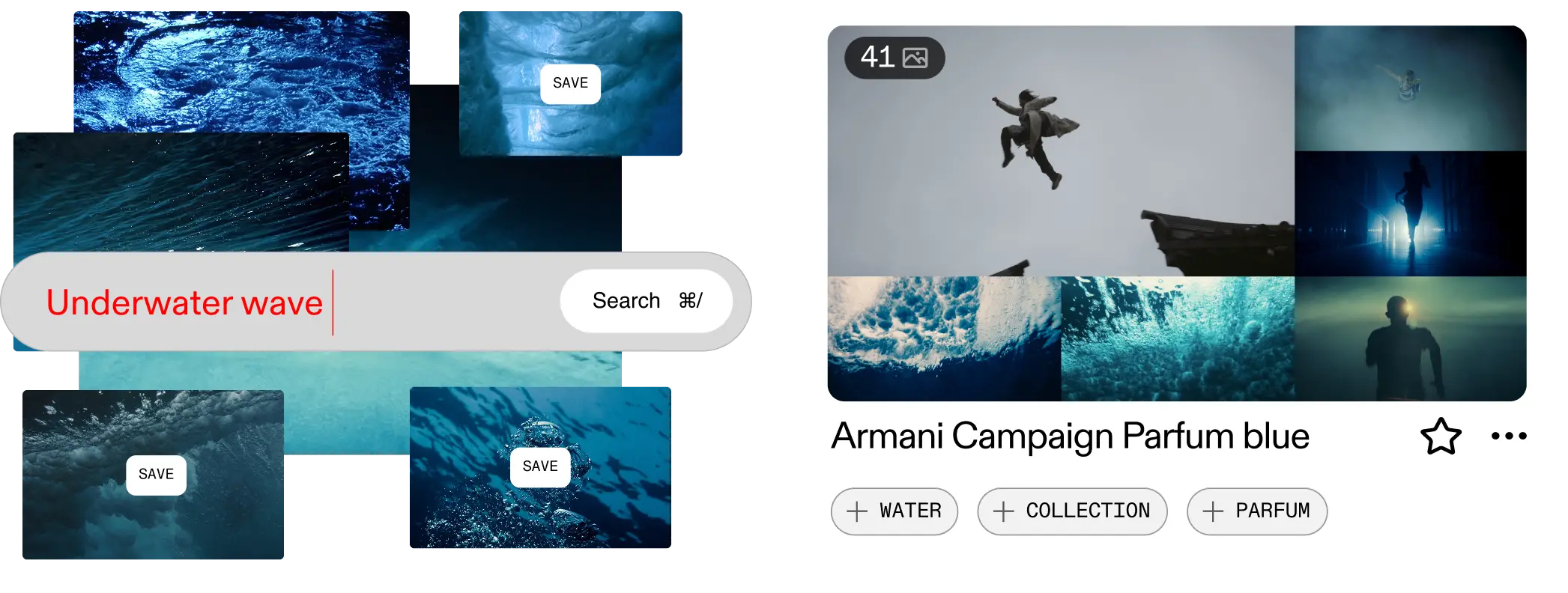
Flim gives advertising creative teams searchable access to millions of cinematic frames, organised not by film title but by what the frames actually look and feel like. Search by mood, by colour temperature, by era, by lighting style. Pull the exact frame that captures the emotional register of your pitch. Build a campaign moodboard — not a collection of things you found, but a coherent visual argument — and share it with your team before anyone opens a script document.
From reference to generation: the full advertising workflow
Finding the right reference solves half the problem. The harder half is showing the client exactly what you mean by it.
A creative director pitching a car commercial knows the feeling they are after: something with the spatial quality of Tarkovsky, those long, slow compositions where the landscape is as present as the subject, where time seems to have a physical weight. They can find that frame in Flim. They can pin it to the board. But the client has not seen "Stalker" and they are not going to. What the client needs to see is their car, in that world, with that visual language applied to it, before a single camera rolls.
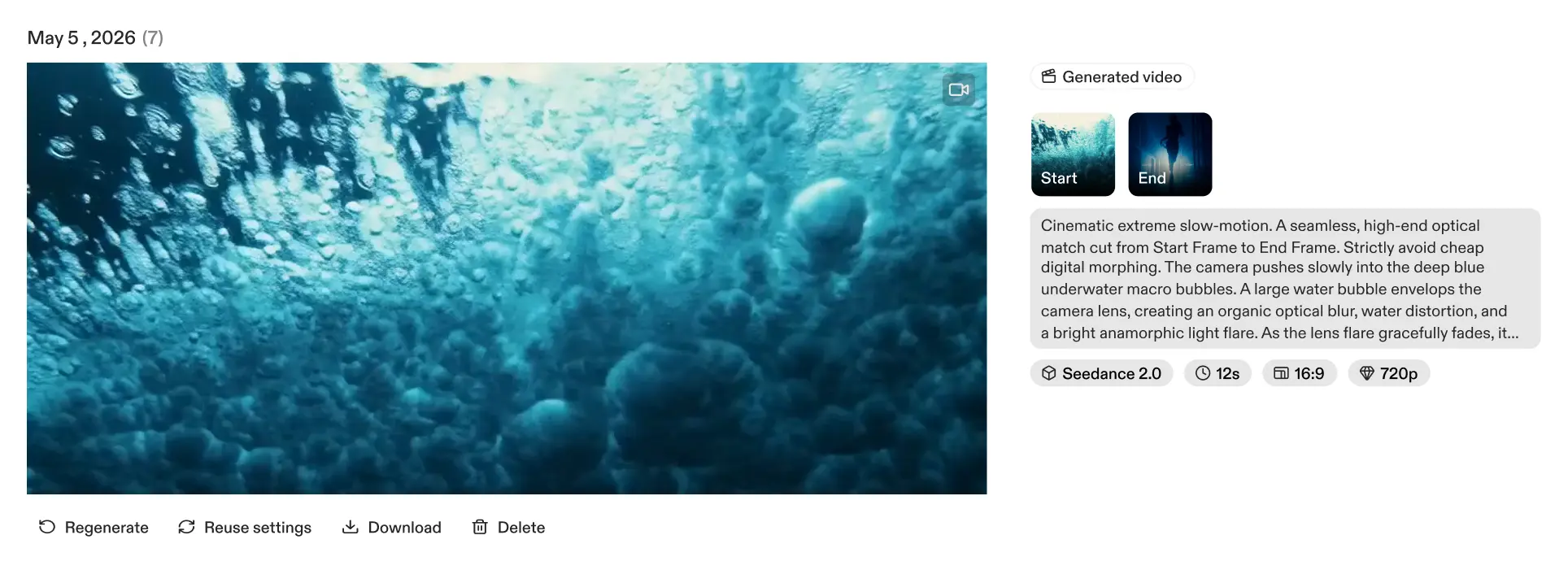
This is the gap that Flim's generative layer closes. The platform gives you access to the most capable cinematic AI models available (Veo, Seedance, Nano Banana) pre-configured specifically to produce output with a cinematic aesthetic. Not a generic AI image with a grain filter applied. Not a preset that flattens everything to the same Instagram-era look. Models calibrated for the light, grain, and depth of film, because that is the only kind of output that is useful in an advertising pitch.
What "configured for cinema" means in practice: default AI generators give you an image. Flim's generation studio gives you a cinematic still, models calibrated for grain structure, light behaviour, colour grading, and depth of field. Not a render that looks like AI. A frame that looks like film.
The workflow becomes: find the cinematic reference that defines the visual world of your campaign, then generate the imagery that shows the client that world with their product in it. Pitch stage becomes production-level in its visual clarity, without production-level cost. The treatment stops being a description of what you intend to make, it becomes a demonstration.
Built for advertising teams, not just individuals
A reference platform that only one person on the team can use is not a platform, it is a private folder. The point of visual references in advertising is alignment: the creative director, the art director, the copywriter, the commercial director, the client all need to see the same thing and mean the same thing by it.
Flim moodboards are built to be shared. The board you build at pitch stage becomes the treatment appendix your commercial director works from. The same board becomes the brief you send to the DP when you are discussing lighting. The same board goes to the stylist, to the production designer, to the colour grader in post. Everyone is referencing the same frames, not a game of telephone played across email chains and screenshot folders.
For agencies running multiple campaigns simultaneously, Flim integrates naturally into the production workflow alongside the tools already in use: Frame.io for footage review, DaVinci for colour, Figma for design assets. It sits at the beginning of that workflow, in the pre-production phase where visual decisions are made before anything is shot. A pitch moodboard becomes a campaign moodboard becomes a pre-production brief without duplication.
How it works
Cinematic pitch deck: Pull references that carry the exact feeling of the campaign. Show the client the world before the first frame is shot.
Director's visual language: Build the frame-by-frame reference board the director works from. Align DP, stylist, and production designer around the same visual intention.
On-set reference: Share the moodboard with the full crew. One visual source of truth across the entire production, from casting to colour grade.
Go further
Got
Questions?

Pinterest is algorithm-driven and shaped by what is trending across millions of users. Flim's catalogue is built entirely from cinematic content (film, series, music videos, commercials) and is searchable by intent, not by social momentum. Your references come from the same visual language that shaped the directors you admire, not from what got shared last week.
Yes. Moodboards are shareable and designed for collaborative agency and production workflows. You can send a board to a client, a director, a DP, or a stylist, everyone sees the same frames, in the same order, with the same visual intention behind them
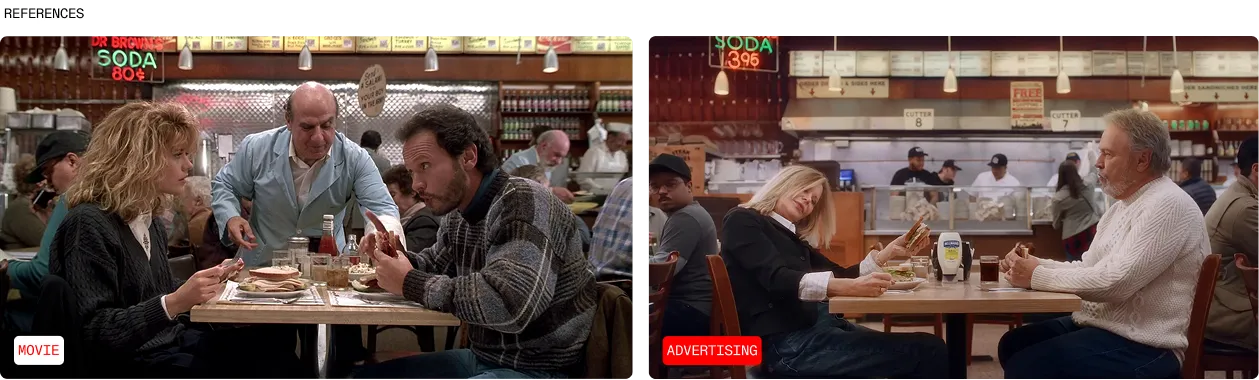
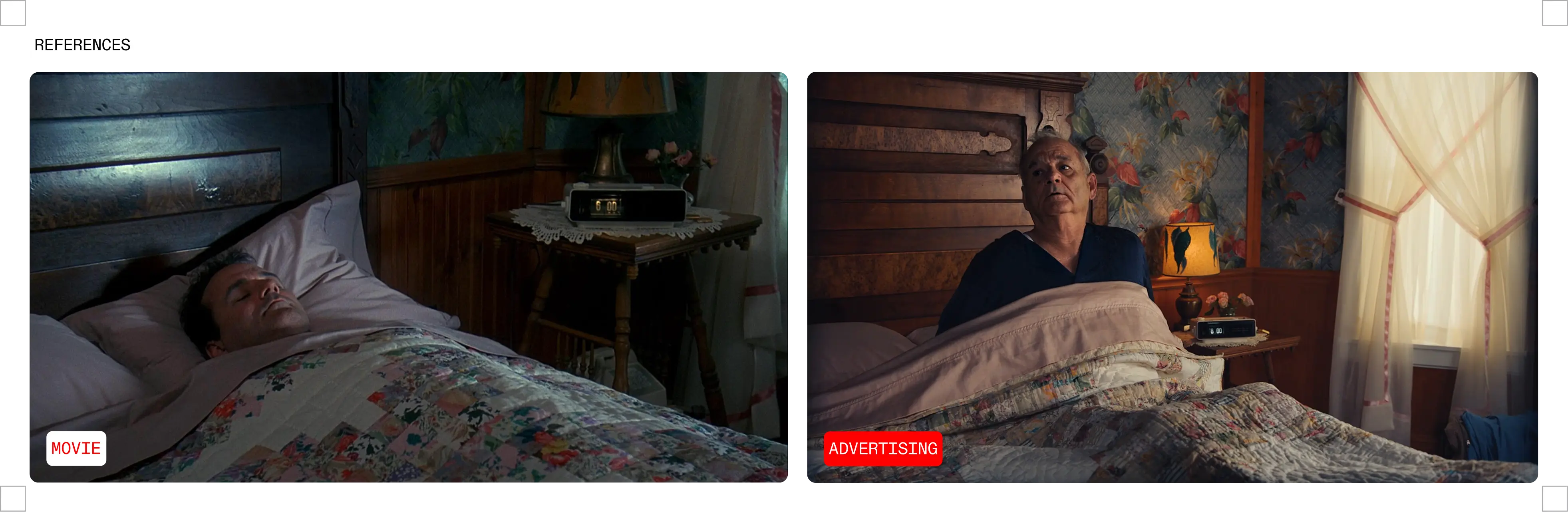
Yes. The library includes commercials, music videos, and series alongside cinema. For advertising teams, this means you can pull references from both the cinematic tradition and from the best work already produced in your own medium.
Both. At pitch stage, Flim gives you the moodboard and the AI-generated imagery to show the client exactly what the visual world looks like. At treatment stage, it gives you the frame references and the mood vocabulary to align with your DP, your director, and your production designer. And in pre-production, it becomes the briefing document you share with every creative on set.
No. Flim's generative models (Veo, Seedance, Nano Banana) are pre-configured specifically for cinematic output. The results carry the grain, the colour grading, the depth of field, and the tonal range of real film. This is not a preset filter on a generic image. It is a generative layer calibrated to produce footage that looks like it was shot, not rendered.