The visual archive for fashion creatives who know their cinema
An Art Director or Creative Content Manager sits down at the start of a campaign or collection cycle. The brand brief says bold, sensual, a little dangerous, and Pinterest hands back the same forty images every other brand's board already has this season. Fashion's most distinctive visual references have rarely come from fashion alone. A single Kubrick interior. An Antonioni red. A specific kind of restrained opulence. Flim makes that archive searchable in the language fashion creatives already think in.

Where fashion's visual language actually comes from
A fashion campaign or collection cycle usually starts with a brand brief in hand and a deadline that doesn't leave much room for slow discovery. The brief names a feeling, not a film: bold, sensual, restrained, a little dangerous. Translating that feeling into something visual is where most teams default to whatever is already circulating in the feed.
Cinema has had a long, instinctive connection to fashion. Costume, colour, era and mood have been referenced by fashion houses for decades, often more directly than fashion admits. The interiors, the wardrobes, the restraint or excess of a particular film era have shaped entire campaigns long before moodboard software existed. The problem has never been whether the references exist. It's that they're scattered across thousands of films with no shared index, no way to search a feeling instead of a title.
Generic moodboard tools give structure without source material. A blank canvas is still a blank canvas no matter how well it organises pins. Fashion blogs and trend round-ups, meanwhile, give a team what's already trending rather than what's true to the brand's specific visual identity, which is exactly the material least useful for standing apart from a competitor's campaign launching the same month.
None of this argues that fashion's own visual culture is secondary. Runway and editorial imagery remain essential, irreplaceable references for silhouette, styling and movement. Cinema deepens and differentiates a board. It doesn't replace fashion's own visual history, and the strongest campaigns still draw on both in the same breath.
Different eras of film carry different value depending on what a brand is trying to say. A house leaning into quiet luxury finds more in the restrained interiors and muted palettes of a particular strand of European drama than in anything currently trending. A house leaning into rebellion finds more in the saturated colour and confrontational framing of a different period of genre cinema entirely. The point isn't that one era is more fashionable than another. It's that the right era, matched precisely to the brand's intent, almost never shows up on the first page of a generic search.
None of this is a new instinct for the industry. Fashion photographers and creative directors have pulled from film for as long as both crafts have existed alongside each other, often quietly enough that the connection went uncredited in the final campaign. What's changed is the volume of material a brief now has to move through and the speed at which an answer is expected. A connection that used to live in one stylist's personal film knowledge has to scale to an entire team working across several markets at once, which is exactly the part a personal memory can't do alone.
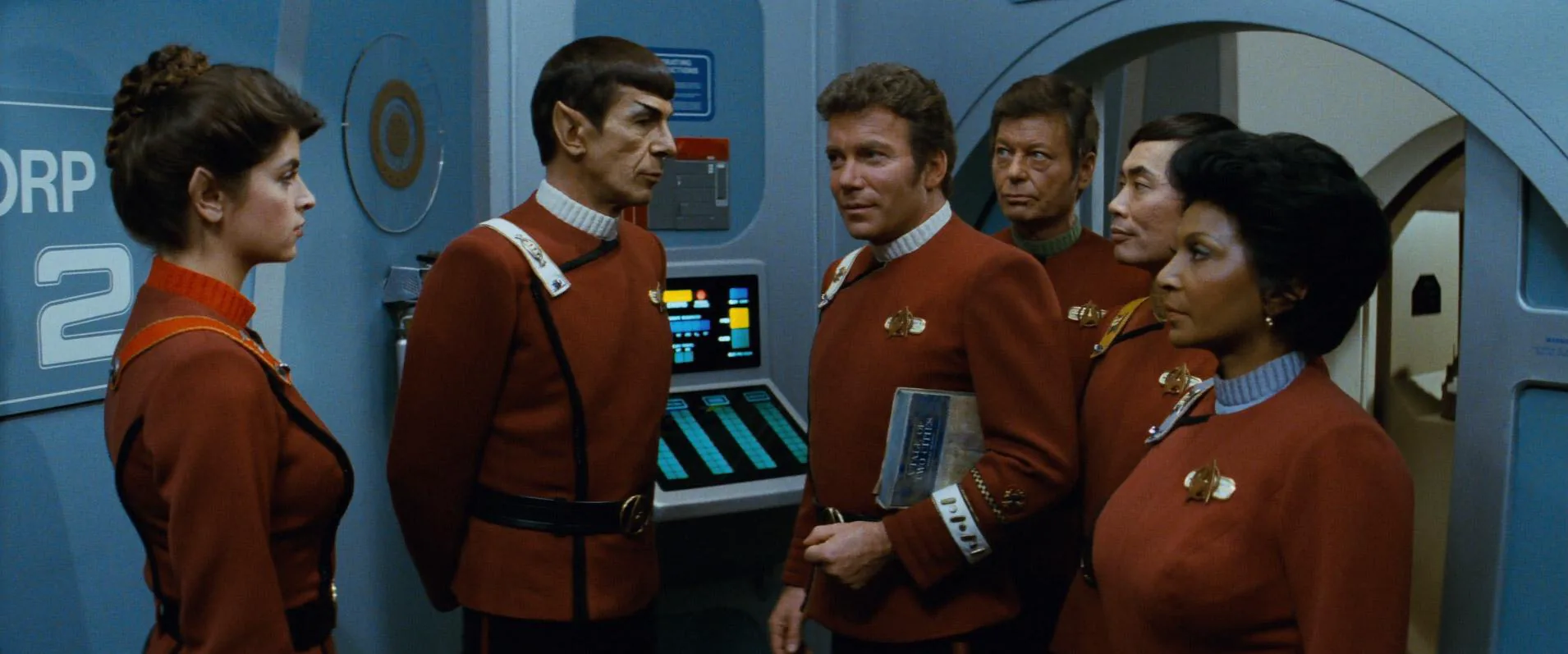
Searching by mood, not by film title
An Art Director rarely walks into a brief already knowing which film holds the right reference. What they know is the texture: a restrained palette, a specific era of tailoring, an interior that reads as wealth without ever looking staged. Flim's AI Search works from that description directly, rather than requiring a title, a director's name, or a frame number already bookmarked somewhere.
That's a different starting point than scrolling Instagram or Pinterest, where the feed surfaces what's trending for everyone this week, not what's true to a specific brand's identity. A search for "1970s opulence, low light, restrained colour" returns frames built from exactly that description, not whatever has the most engagement this month across thousands of unrelated accounts.
For a Fashion Graphic Designer maintaining visual consistency across markets, that searchability becomes a working standard rather than a one-off mood exercise. A shared board, built once from a precise search, gives external creative teams in different markets the same visual anchor to work from, instead of each office independently reinterpreting a brand brief from a different starting point.
The search also handles the in-between cases that are hardest to put into words on a call: not quite warm, not quite cold, a kind of light that exists right at the edge of overexposure. Describing that precisely to a stylist over email rarely lands the same way twice. Searching for it directly and pointing at the result removes the translation problem entirely.
A seasonal lookbook tends to surface the same problem at a larger scale. A team building twelve or twenty looks across a collection needs each one to feel related without feeling repetitive, which is much easier to judge against a board of varied cinematic references than against a single hero image stretched across an entire shoot.
From reference to brief: aligning photographers, stylists and teams
The real workflow rarely stops at the moodboard. An Art Director builds a board, then shares it with a photographer, a stylist and a set designer to brief an actual shoot. Without a shared reference, that brief becomes a verbal description repeated slightly differently to each person on the call, and the gaps between those descriptions show up later, expensively, on set.
A Senior Producer reads the same board differently: as a way to scope creative ambition and anticipate cost before a shoot is greenlit. A reference built from a remote desert interior with specific period production design tells a producer something concrete about location, set build and budget long before a single line item is drafted, rather than discovering the scope mid-production.
That early visibility changes the conversation with the brand too. Instead of presenting an abstract concept and hoping the budget conversation goes smoothly afterward, a producer can walk into the same meeting with the references already attached to a rough cost reality, so ambition and feasibility get discussed together rather than as two separate, sometimes contradictory conversations weeks apart.
A Creative Content Manager has a third use for it again. The hero campaign isn't the only output anymore. Always-on social content, behind-the-scenes material and editorial rollout all need to read as the same campaign, not a hero shoot followed by a scramble of unrelated content weeks later. A shared board keeps that thread visible from the first brief through months of ongoing output.
How it works
Define the brief: Search the feeling behind the brand brief. AI Search returns matching frames from a description alone, not a film title.
Align the team: Share the board with photographer, stylist and set designer so everyone briefs from the same references.
Keep the thread: The same board anchors always-on content and editorial rollout to the original campaign mood, weeks after the shoot.
The same board keeps its value past the shoot, too. A retoucher or post-production team working from the original references, rather than from a verbal description of "what we were going for," tends to land closer to the brief on the first pass, which means fewer rounds of revisions between studio and brand before final delivery.
From mood to motion: extending the reference further
Once a board reflects the right visual direction, that same direction can be pushed further before anything is booked. The Aesthetics feature locks that visual world as a style, then Nano Banana generates new still images inside it, and Veo or Seedance extend a specific look into motion when the campaign calls for it.
That's useful for testing how a lighting or colour treatment actually reads before committing to a location or set. A restrained, low-light interior described in a brief can be generated as a still and reviewed by the brand internally, well before a location scout confirms whether the real space can deliver the same effect.
Fashion campaigns are commercial productions by definition. Generated visuals are amazing to support pitch and pre-production exploration, helping a team test and refine a direction before committing budget.
That distinction matters more here than in most other verticals, since a campaign's final imagery carries commercial weight the moment it's released. Generation is a way to align internally and de-risk a direction before the shoot, not a way to shortcut the shoot itself.
It's also a useful way to settle disagreements before they reach a shoot day. Two stakeholders describing "warmer" or "moodier" can mean genuinely different things until each version exists as an actual image side by side. Generating both readings of the same reference, quickly, turns a subjective debate into a visible choice, which tends to resolve faster than another round of adjectives on a call.
Multiple stakeholders weighing in on the same campaign, often across regional teams with their own visual instincts, is the norm rather than the exception in fashion. A board that can be searched, refined and quickly extended into a few generated variations gives every voice in that conversation something concrete to react to, rather than asking everyone to align around a single written description of a feeling.
Go further
Got
Questions?

Milanote is a blank canvas and Pinterest is trend-driven. Flim's reference base is a curated cinema library of over two million frames, searchable by mood rather than browsed by what's popular.
Yes, boards are shareable and built for collaboration across creative, production and external partners.
The library spans films, series, commercials, music videos and fashion films alongside cinema. It's broad visual culture, not narrowly movies.
Yes, and even videos, through pre-configured models. It's useful to visualise a direction before the shoot.
Both. Mood and reference at kickoff, then a consistency anchor through brief, shoot and rollout into ongoing content.