Win the job with a treatment that looks like the film you're describing
A director or DOP has 48 hours to turn a verbal pitch into a treatment deck before a competitive call. The references in their head are precise: a specific kind of overcast light, a framing style. But stitching together stills from memory, old bookmarks and a frantic Google Image search rarely produces a deck that reads as confident as the pitch itself. Flim gives directors and DOPs a searchable library of over two million film frames, plus the tools to board and generate from them, so the treatment looks like the film being described, not like a moodboard assembled in a hurry.
Why treatments live or die on their references
A treatment usually starts the same way: a pitch deadline, a director or DOP with precise references already in mind, and no time to mine cinema manually for the exact frames that match them. The clock is the real constraint here, not the idea.
A treatment's job is to make a client or producer see and trust a director's visual instinct before a single frame is shot. The writing carries part of that weight, but the references carry just as much. A page of confident prose next to a folder of mismatched stills reads as a deck that hasn't been thought through yet.
That's the actual gap most teams hit. Generic stock libraries don't read as cinematic, no matter how the frame is cropped. Google Images returns whatever is most indexed, not what fits the specific light or era a director has in mind. Manually screenshotting films works, eventually, but it's slow, inconsistent in quality, and rarely covers more than the two or three films a team happens to remember off the top of their head.
None of this means a strong treatment is only about visuals. Structure and writing matter too, and a beautifully referenced deck with a thin narrative still loses the room. But the visual reference layer is where most decks lose credibility first, often before a producer has read a single line of the writing. A treatment that looks borrowed from stock photography reads as a treatment that wasn't thought through. Flim's library of film stills and video extracts exists to close that specific gap.
Search by feeling, build the deck around it
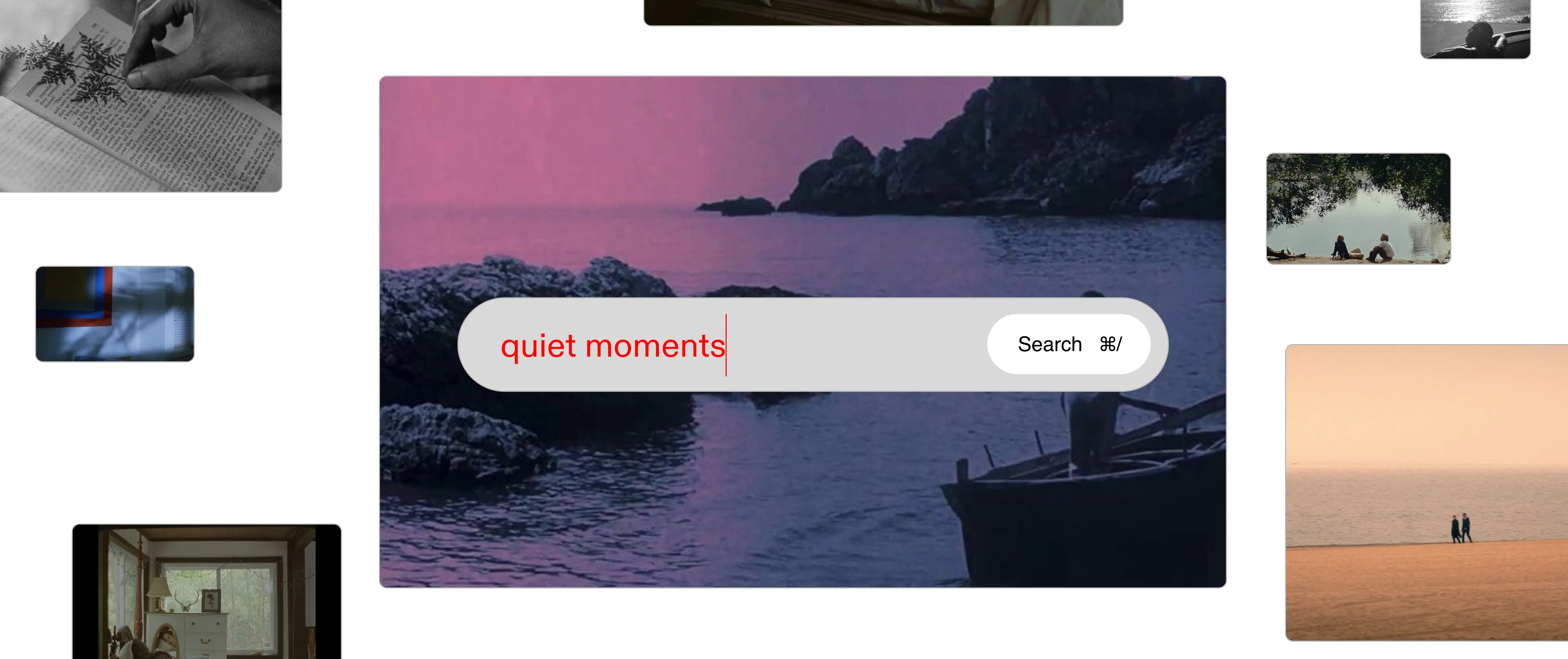
Flim's AI Search works from a description: the mood, the light, the era, the framing already in a director's head, rather than a film title or a piece of technical metadata. Type what the scene should feel like, and the search returns frames that match it.
That's a genuinely different starting point than ShotDeck. ShotDeck's strength is deep metadata tagging: director, DP, lens, camera, built for users who already know exactly which film and which shot they want to reference. Flim's AI Search is built for the more common situation: starting from a feeling or a description rather than a known reference already bookmarked somewhere.
It's worth being precise about the comparison, since both libraries actually cover similar ground. ShotDeck's library also spans commercials and music videos, not only feature films. The real difference between the two tools is the search method, not the scope of what's searchable. Flim's AI Search starts from the feeling, not the film title. For directors who haven't already memorised which film holds the reference, that's the part that actually saves the 48 hours.
Build the treatment with frames actually integrated into the deck
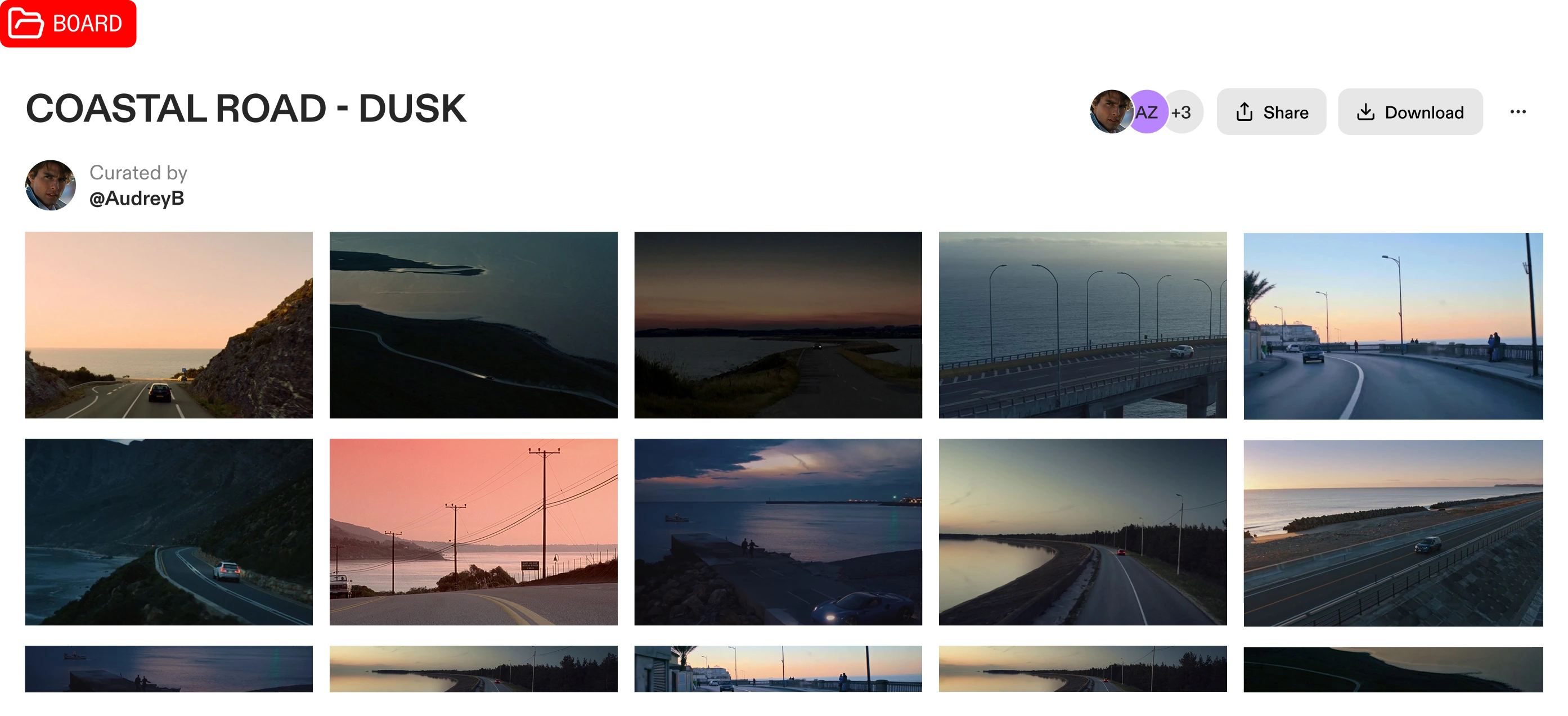
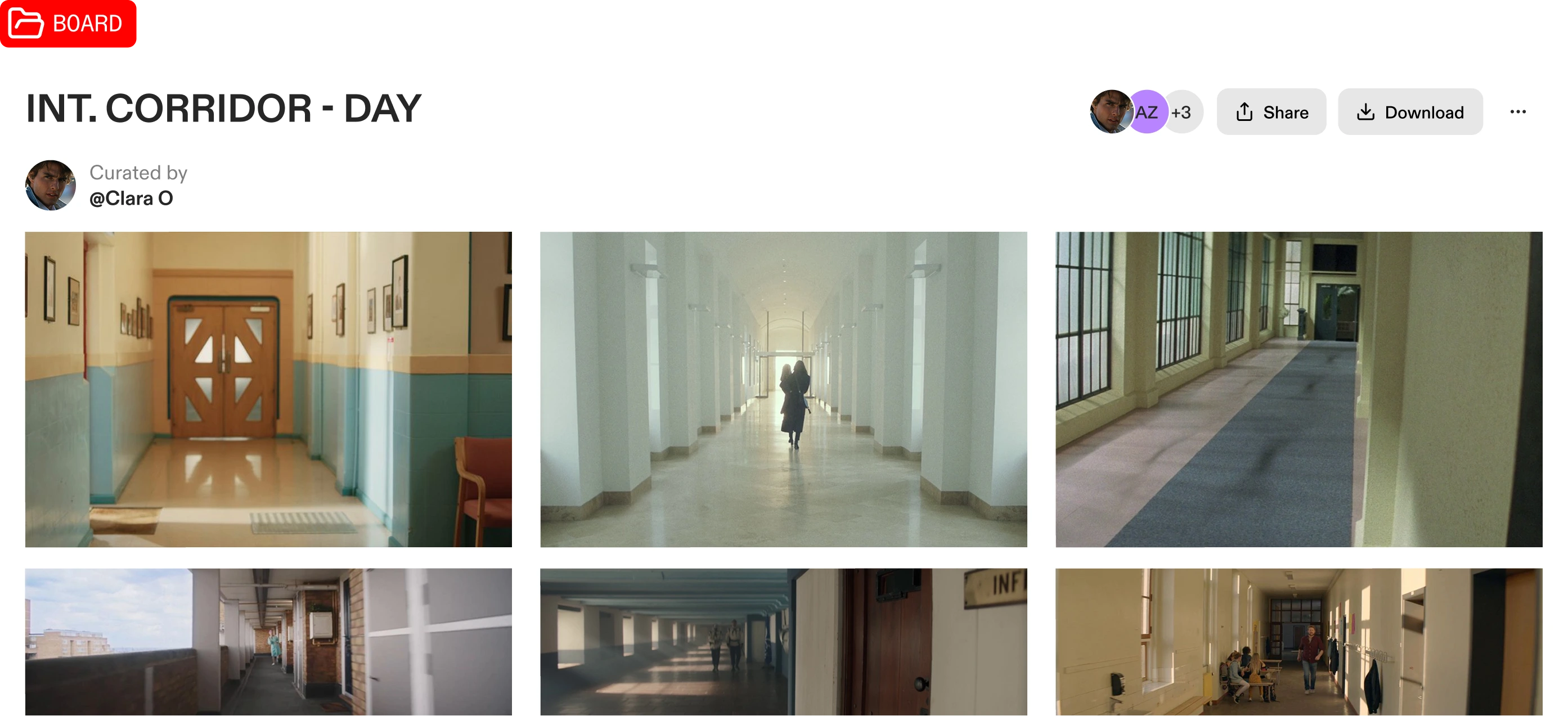
Finding the right frames is only half the workflow. The other half is getting them into the deck in a layout that actually looks like a treatment, not a loose grid of inspiration images pasted at the end. Search references, assemble a board, then drop selected frames directly into the treatment layout style directors already use: a reference image, a caption, a section, repeated for each beat of the pitch.
A DOP backing a lighting or framing decision uses this to put an exact frame in front of a producer instead of describing it in words. "Cold blue practicals, wide negative space" is a sentence. The matching frame, sitting in the deck next to the scene it's meant to inform, is proof.
A director presenting a coherent visual world across the whole deck gets the same benefit at a larger scale. Six or eight frames pulled from a consistent search, laid out section by section, read as one visual idea carried through the whole pitch, rather than a loose set of inspiration images that each pull in a slightly different direction.
Most decks don't stop at stills. Professionals routinely drop a short video extract or GIF alongside the frames to carry camera movement, a lighting change, or a rhythm a static image can't show, and Flim's library covers both, so that motion reference comes from the same search instead of a separate tool.
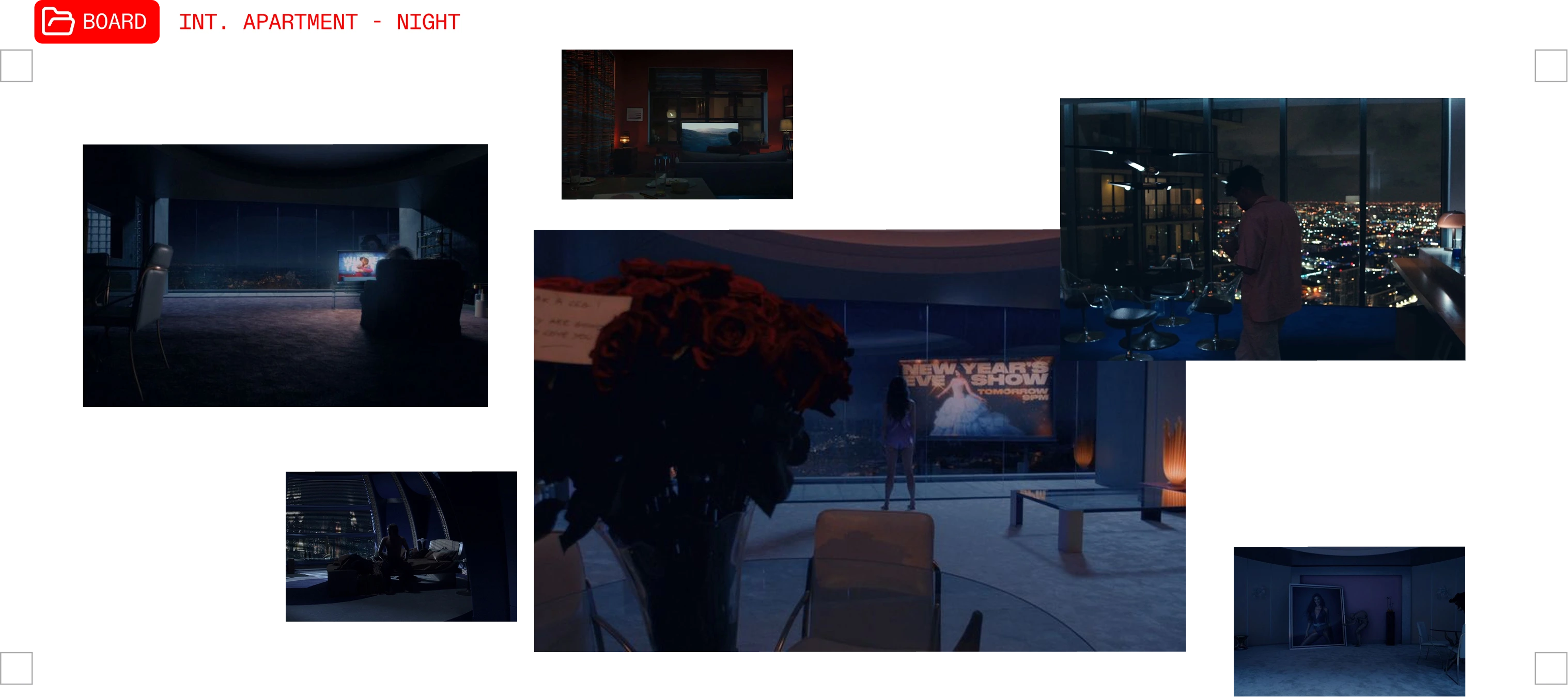
Here's what that looks like inside an actual treatment layout: a board of selected frames, each with a slugline-style caption, laid out the way they'd sit on a real treatment page.
This is the actual unit of the page, not a hero banner sitting above the text. Each frame carries a caption the way a real treatment would, so the gallery reads as a working section of the deck rather than a decorative example of one.
From reference to generation, still inside the same deck
Once a visual direction is locked from a set of selected frames with the Aesthetics feature, that direction doesn't have to stop at the frames that already exist. Nano Banana generates new images within that locked style, and Veo or Seedance extend a specific look into motion, for the exact shot a director has in mind but that doesn't exist as a found frame anywhere in the library.
This is the layer ShotDeck doesn't have at all. Flim moves from reference library to generation without leaving the platform, so a missing frame doesn't mean settling for the closest available substitute or breaking the workflow to go generate one somewhere else.
One caution matters here: generated visuals support the pitch as treatment-stage visualisation, not as final production or shot-ready material. They're a way to show a producer what a shot could look like before it's scouted, lit and actually filmed, not a substitute for the production itself. From reference to generation, without switching tools.
How it works
Define the brief: Search the feeling behind the brand brief. AI Search returns matching frames from a description alone, not a film title.
Align the team: Share the board with photographer, stylist and set designer so everyone briefs from the same references.
Keep the thread: The same board anchors always-on content and editorial rollout to the original campaign mood, weeks after the shoot.
Go further
Got
Questions?

Flim is a reference and visual-board tool, not a treatment-writing or document tool. It's where directors and DOPs find, board and generate the visual references a treatment is built around. The writing and deck assembly stay in whatever document or design tool the team already uses.
ShotDeck is built around deep metadata tagging: director, DP, lens, camera, for users who already know the exact film and shot they're after. Flim combines AI Search, starting from a description of mood, light or framing rather than a known title, with its own tags and filters, and adds a generative layer ShotDeck doesn't have. Both libraries cover films as well as commercials and music videos.
Yes. The Aesthetics feature locks a visual direction from existing references as a style, then Nano Banana generates new images within it, or Veo or Seedance extend it into motion. This is useful for visualising a shot that doesn't exist as a found frame yet.
Yes, boards are shareable and built for collaboration between director, DOP and producer before the deck is finalised.
No. Flim handles the visual reference and board-building layer. Most teams export or screenshot selected frames into their existing treatment template or deck tool for final assembly and writing.