Build the visual world of your music video before the first location scout
A director or DOP gets attached to a track. There's a sound, an artist, maybe two reference clips the label sent over, but no visual language yet. Pinterest returns aesthetic noise. Stock footage returns nothing with the right grain. The references that built the best music videos have rarely come from other music videos. They've come from cinema. Flim gives directors and DOPs searchable access to millions of film frames, organised by feeling rather than film title, so the visual world exists before the first location scout.
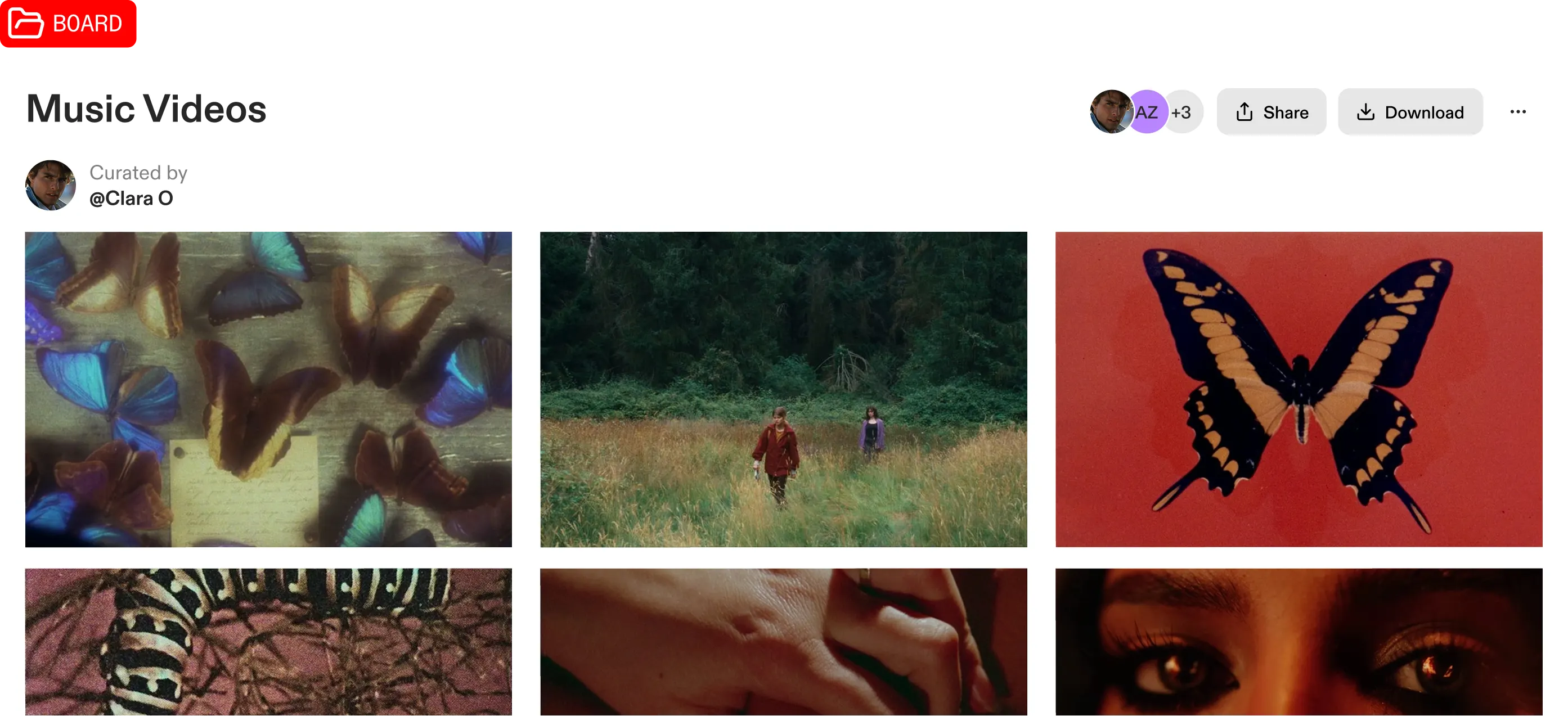
Why the best clips borrow from cinema, not from other clips
The brief for a music video rarely starts with a script. It starts with a track, an artist, and a handful of reference clips the label has already seen a hundred times this year. Loop those same clips for inspiration and the treatment starts to look like everyone else's treatment: the same lighting setups, the same crash zooms, the same colour grade recycled from the last viral release in the genre.
Cinema has always been the deeper well. Decades of films, shot by directors of photography who spent entire careers solving problems of light, colour and framing that a three-day video shoot rarely has time to solve from scratch. The reference that hasn't been seen in fifty other clips this year is the one that makes a treatment stand out. A specific kind of overexposed interior from a 1970s drama. The particular green-blue wash of a late-night chase scene. A framing choice from a film nobody on the call has seen recently enough to recognise it.
This isn't an argument that clips have nothing to teach a director. Music videos bring a rhythm, an energy and a genre-specific visual grammar that cinema, built for a different pace, doesn't naturally produce. Cinema deepens a treatment's visual language. It doesn't replace the genre instincts that make a clip feel current, and the strongest treatments still draw on both.
The genre matters here too. A pop video and a hip-hop video and an alternative-rock video are not pulling from the same shelf of cinema, even when they're solving the same underlying problem. A pop treatment might lean on the saturated production design of a particular studio era; a hip-hop video might find more in a gritty urban drama's framing and lens choices; an alternative act might want the muted, handheld intimacy of a slow character study. The same library, searched differently, serves all three without forcing any of them toward a generic look.
The problem has always been access. Scrolling for the right reference across film stills scattered over the internet, half-remembered titles, and forum threads is slow, and most of what surfaces is the same handful of clips everyone already knows. Flim's library replaces the scroll with a search.
Entire decades of film history sit underused for this kind of work: the saturated, theatrical colour palettes of certain 1970s genre films, the long observational stillness of a particular strand of European drama, the cold institutional lighting of 1990s thrillers. None of it shows up on the first page of a generic moodboard search, and most of it has never been mined as a music video reference at all, which is exactly what makes it useful to a director trying to avoid the obvious.
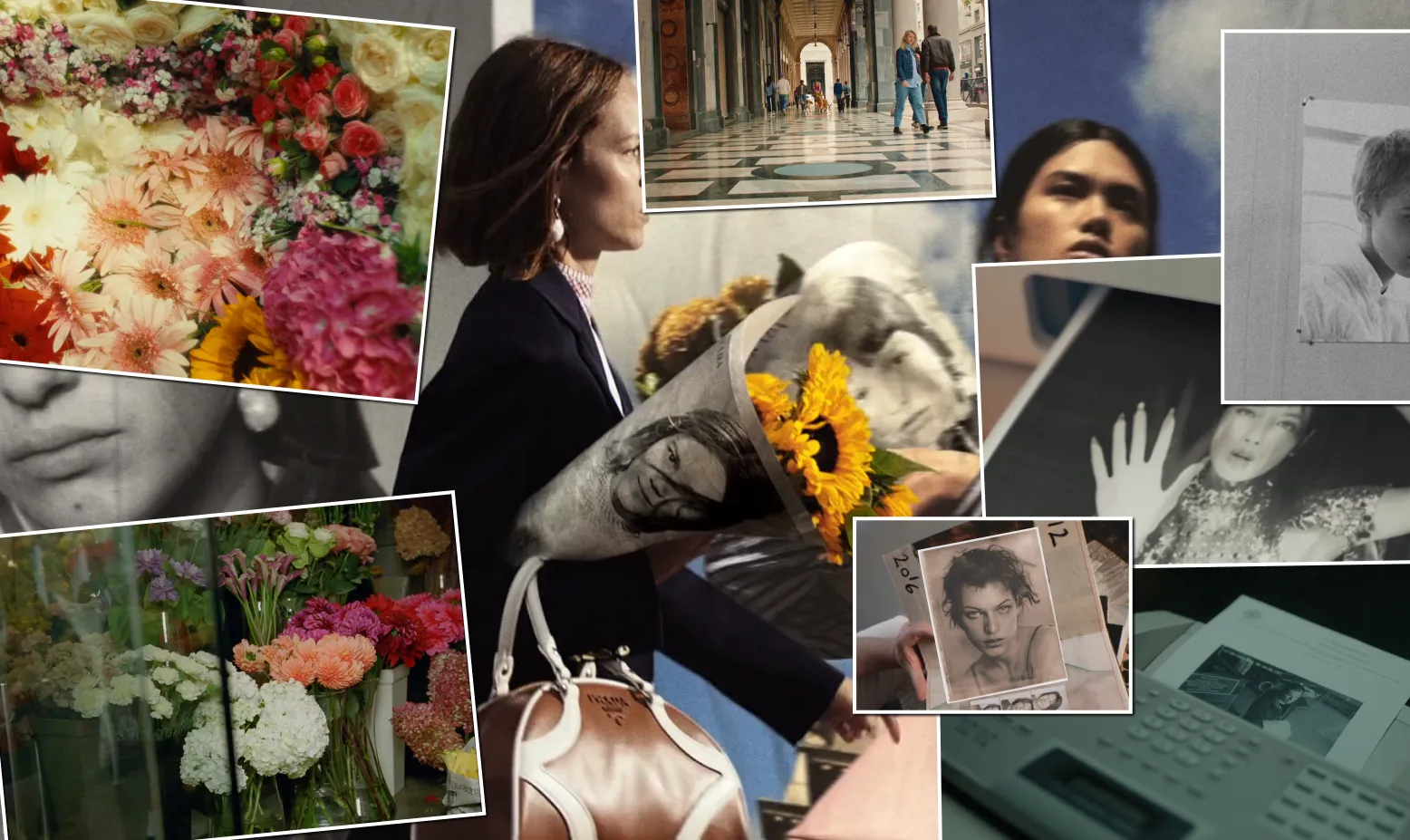
From a track to a treatment: building the visual language
A director attached to a new music video often gets a five-adjective mood brief on a call with the artist or label, and a treatment due before the end of the week. There's rarely time to mine cinema manually for the right references while also writing the deck.
Flim's AI Search works from that same five-adjective brief. Describe the texture, the era, the quality of light, rather than scrolling generic moodboard sites for whatever is trending. Cold fluorescent interiors, 90s VHS warmth, a specific kind of overcast daylight, a face half-lit by a single practical lamp. The search returns frames that match the description, not the algorithm's idea of what's popular this week.
The board built from that search becomes the backbone of the treatment itself: performance references, lighting intentions, rhythm cues, all in one place a director can hand off to back a director's treatment without re-explaining the visual world from scratch on every call.
The search itself stays conversational rather than one-shot. A first description returns a wide spread of frames; refining it toward "the same warmth, but more blown-out highlights" or "closer to this, but with handheld energy" narrows the board without forcing a director to restart from a blank page. That iterative back-and-forth is closer to how a treatment actually gets built in practice, a few minutes at a time between calls, than a single perfect query typed once.
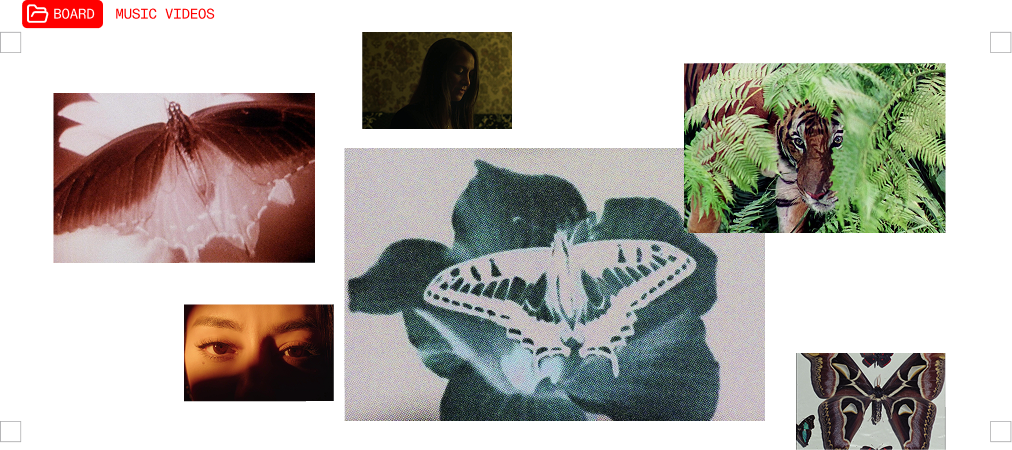
From reference to generation, without losing the artist's DNA
Once the visual references for a music video are set, Magic Board can draft a starting board directly from a script or pitch, giving a director a usable starting point before they've manually pulled a single frame. From there, the Aesthetics feature locks that visual world as a style, Nano Banana generates new still images inside it, and Veo or Seedance extend a chosen look into motion.
A director with one precise lighting reference can generate a still in that exact aesthetic and send it to the artist or label before committing budget to a location. It's a faster way to align on a direction than describing it over a call, and it gives a label something concrete to react to instead of a mood board full of other people's videos.
Generated stills show intent and help a label sign off on a direction before a location scout. They're pre-production visualisation. The final frame is still built on set, by the director and DOP, on the day.
That distinction matters more in music video production than almost anywhere else, where an artist's identity, energy and DNA carry as much weight as the visual concept around them. Generation here is a way to test a lighting idea or a framing choice quickly, not a way to skip the work of actually shooting the artist.
The same generation layer is useful earlier than the pitch stage too. A director still narrowing down a treatment can generate two or three variations of the same reference frame, pushing the colour grade warmer or the lighting harder, to settle on a direction internally before it ever reaches the label. It removes a round of back-and-forth that would otherwise happen on set, on the day, when there's no time left to experiment.
Built for how directors and DOPs actually work together
Music video production runs on a small, fast-moving team: director, DOP, sometimes the artist or label directly on the same thread. A board only one person can see slows that down. Flim boards are shareable, so a DOP can pull frames into a lighting conversation and a director can keep the artist looped in on the visual direction, all from the same board rather than a chain of screenshots and texts.
DOPs use Flim to back lighting and lens decisions with concrete frames rather than describing a feeling in the abstract. A specific lighting ratio, a particular camera movement, a framing choice borrowed from a film the whole crew can actually look at together before the gear even arrives on set.
It also speeds up bringing a new collaborator into an existing project. A gaffer or camera operator added to the crew two days before the shoot can open the board and see, in a few minutes, the exact lighting references and framing decisions the director and DOP already agreed on, rather than sitting through a verbal recap that inevitably loses detail in translation.
The library itself isn't a separate silo for cinema. It spans films, series, ads and music videos already in the catalogue, so a reference pulled from a commercial or another artist's video sits in the same searchable space as a film still from decades ago, and the same board can travel from treatment, to set, to the colourist in post without losing its references along the way.
That continuity matters once the shoot wraps. The same board that backed the treatment and guided lighting on set becomes the reference the colourist works from in the grade, so the look the director pitched to the artist in week one is the look that actually ships, rather than something that drifted across four separate stages of production with no shared anchor in between.
How it works
Define the mood: Describe the texture, era and light in five adjectives. AI Search returns matching frames from the description alone.
Build the backbone: The board becomes the visual backbone of the deck: lighting intentions, rhythm cues and performance references in one place.
Share with the crew: One visual reference on set for director, DOP and crew, not a chain of screenshots passed around between calls.
Go further
Got
Questions?

Pinterest and YouTube surface whatever is trending or pushed by the algorithm. Flim's library is curated cinema, searchable by mood and era, so the reference pool isn't already mined by every other treatment released this season.
Yes. Boards are shareable and built for presenting alongside a treatment, so an artist or label can see the same references the director is working from.
The library spans films, series, ads and music videos alongside cinema, and includes both still frames and video extracts, not stills alone. It isn't narrowly limited to feature films.
Yes, through pre-configured models. It's useful for visualising a direction before committing budget to a shoot, not a replacement for the final production.
ShotDeck also covers music videos and commercials, not only feature films, so the two libraries overlap in scope. Flim differentiates on AI Search by mood, combined with its own tags and filters rather than ShotDeck's metadata-first search, a more international and varied catalogue, and a generative layer ShotDeck doesn't have.