The ShotDeck alternative that searches by feeling
Flim is a ShotDeck alternative built for creatives who search by feeling rather than by title. Its AI Search reads natural-language descriptions of mood, light, colour and era across over 2 million frames from films, series, ads and music videos, then lets you build shared boards and generate cinematic images and video in the same platform.
ShotDeck built a well-known archive of film stills, searchable by title, genre, director, cinematographer. Many DOPs and art directors use it as a starting point. But a brief rarely starts with a title. It starts with a mood, a colour temperature, a decade, a feeling you can't quite name. Flim's AI search engine was built for that moment. Over 2 million frames from films, series, ads, music videos, and more, searchable in natural language, without having to know what you're looking for before you find it.
What does ShotDeck do well, and where does it stop?
ShotDeck's proposition is clear: a professionally curated archive of film stills, tagged with detailed metadata. Director, cinematographer, year, aspect ratio, shot type, colour palette. For film technicians who already know what they're looking for ("Roger Deakins, interior, 2010s, wide"). It works well. The database is deep, the image quality is high, and the filtering is precise.
But its architecture reveals who it was built for. ShotDeck was designed primarily for DOPs and camera technicians. The metadata hierarchy prioritises technical parameters (focal length, lighting setup, shot size) over the aesthetic qualities of an image: its mood, its visual richness, the feeling it produces. For a director or art director whose brief starts from an atmosphere rather than a lens choice, that technical focus leaves less room for what actually drives the search.
ShotDeck's library also has a narrower scope than it might appear. It skews heavily toward Hollywood productions, with limited geographic and historical diversity. Directors working with non-US visual references, or looking for a specific tradition of European or Asian cinema, will find the coverage thin.
There is also a structural ceiling: ShotDeck stops at reference. Once you've found a frame, there is nothing to do with it beyond saving it to a basic collection. No generation layer. No collaborative workspace. No way to go from the visual language you've just found to anything new.
Who are ShotDeck and Flim built for?
ShotDeck is for cinematographers researching lens choices, gaffers building a lighting plan, production designers pulling reference by genre. If your brief is technical and your reference pool is mainstream cinema, ShotDeck's precision is the right tool for that job.
Flim is built for a different moment. It shows up earlier, when the brief is still a feeling rather than a shot list, and it stays later, once the reference has been found and something has to be made from it.
How is Flim's search different from ShotDeck's?
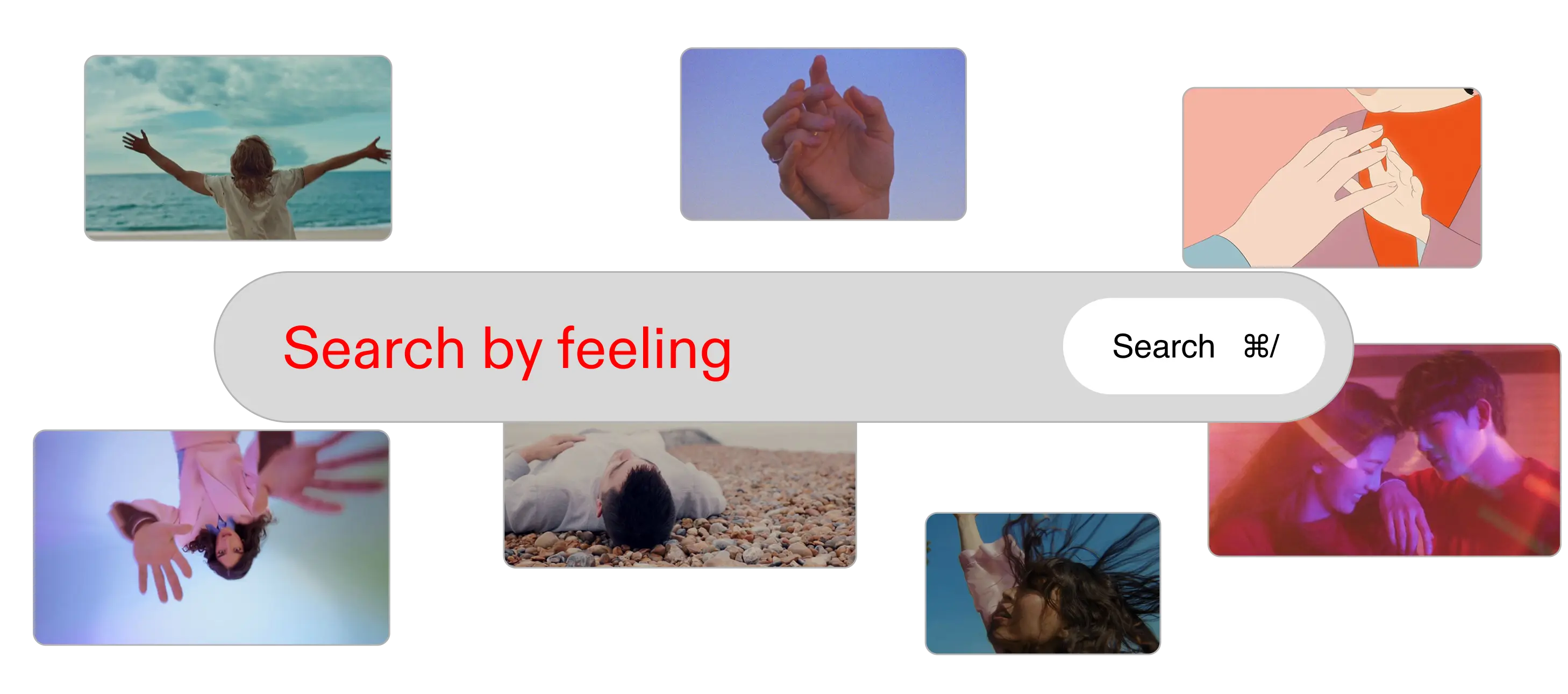
The most consequential difference between ShotDeck and Flim is how search works. Flim's AI Search isn't limited to metadata tags. It understands visual meaning, and pairs that with its own tags and filters to narrow results further. Type "blue hour, desaturated, intimate distance, melancholy" and the engine surfaces frames that match that feeling, not a title that happens to contain the word "blue." Type "golden hour Italian countryside, 70s grain, long lens" and the results reflect a visual aesthetic, not a keyword match.
This matters because the creative process doesn't start with facts. A moodboard session starts with a feeling that needs to be found, not a catalogue that needs to be filtered. ShotDeck's approach serves those who already know the technical vocabulary: the DOP who wants to pull frames by aspect ratio and lighting rig. Flim's search engine is built for the way creative professionals actually think when a brief is open on the desk and the question is aesthetic, not technical.
The search accepts natural language descriptions formulated by emotion, atmosphere, era, or the quality of light. Fewer searches to find the right reference. More confidence that the results actually reflect what you had in mind.

A richer, more diverse visual library
ShotDeck's identity is built around a certain canon of Hollywood cinema. The library skews toward US productions and well-known titles, with limited coverage of non-Anglophone films, documentary traditions, or the visual history of earlier decades. If your reference sits outside the Hollywood mainstream, the depth drops off quickly.
Flim's library was built with broader ambitions. Over 2 million frames and video extracts drawn from films, TV series, ads, music videos, fashion films, and documentaries, with genuine geographic and historical range. For a commercial director pitching a car campaign, that means richer access to advertising references alongside cinema. For a music video director, it means a library with broader international range and deeper niche coverage; ShotDeck covers music videos and ads too, but skews heavily US and mainstream.
More than a reference tool: the full creative workflow
ShotDeck is a reference archive. You search, you save frames to a collection, you build a basic board. That is where it ends. Flim is built as a complete creative assistant, covering the full workflow from initial research to final pitch without switching tools.
The workflow this enables is qualitatively different from anything ShotDeck offers. You find a reference in the archive. You identify the visual language: the light, the palette, the texture. You build a board with your team and iterate directly in Flim. And then, without leaving the platform, you generate new images within that same visual language, or build a full pitch board from a written concept using Magic Board.
For a Creative Director building a pitch, or a director writing a treatment for a music video: finding the reference used to be the end of the research session. With Flim, it becomes the beginning of the creation session.
Can you use ShotDeck and Flim together?
Plenty of professionals do. DOPs, art directors and producers routinely list both tools side by side as part of the same reference kit.
The usual split: ShotDeck for tightly technical, mainstream-cinema research, Flim for the broader moodboard, the ad or music video reference, and anything that needs to move from inspiration to a generated visual without leaving the tab.
Explore our article on the best film stills websites for more info.
How it works
Describe what you're looking for in natural language. The AI semantic engine returns frames from across 2M+ items, ranked by visual and aesthetic relevance. Refine by decade, colour, format, or mood.
Save frames to collaborative boards. Use Magic Board to generate a full moodboard from a pitch or story in seconds. Share with your team, embed in director treatments, export for client presentations.
Lock a visual style with Aesthetics, from a custom input or a predefined look, then generate within it: Veo and Seedance for video, Nano Banana for images, pre-configured for film light, grain, and depth.
Go further
Got
Questions?

Flim is a strong ShotDeck alternative for creative professionals who need more than a filter-based archive. Where ShotDeck organises stills by technical metadata and focuses heavily on Hollywood cinema. Flim's AI Search understands natural language descriptions: mood, colour, era, feeling. The library extends beyond cinema to include ads, music videos, fashion films, TV series, and documentaries, with over 2 million frames. And uniquely, Flim covers the full creative workflow: collaborative boards, Magic Board (instant board from a pitch), Aesthetics to lock a visual style, and a cinematic generation studio, Nano Banana for images, Veo and Seedance for video, that generates within it.
ShotDeck's search relies on metadata: title, year, director, genre, technical shot information. It's built for film technicians who already know what they're looking for. Flim uses an AI semantic search engine trained on visual meaning: you describe what you're looking for ('blue hour, distant figure, 70s film stock') and the engine surfaces frames that match the feeling, not just the facts. Flim also has its own tags and filters for narrowing by shot type, colour, or format once a search returns results. For a creative brief that starts from a mood or an aesthetic rather than a title, this combination makes a significant difference.
Flim's library contains over 2 million frames and clips drawn from films, series, ads, music videos, fashion films, and documentaries, with broader geographic and historical diversity than ShotDeck, which skews heavily toward US productions. For creatives working across advertising, fashion, and music video, Flim's coverage is more aligned with real project needs.
Flim offers a free tier with unlimited search and one download per day, so you can explore the library and test AI Search before committing to a plan. Paid plans start at €14.90 per month. See the full breakdown at flim.ai/pricing.
Yes. Flim is built as an all-in-one creative assistant. Beyond search, it offers collaborative moodboards, Magic Board (generate a full board from a pitch or story description), Aesthetics (lock a custom or predefined visual style), and a cinematic generation studio that generates within that style (Nano Banana for images, Veo and Seedance for video). ShotDeck is limited to reference search and basic board building. Flim covers the full creative workflow.