The Milanote alternative for finding visual references
Milanote is a flexible board for organising your own notes, images and files. Flim is a visual reference search engine: over 2 million references from films, TV series, ads and music videos, searchable by mood, light and colour, with full credits. Use Flim to find the references, and Boards to share them.
You open a new Milanote board for a pitch. The columns are ready, the brief is pinned in the corner, and the space where the references should go is empty. Milanote is very good at arranging what you bring to it. It does not tell you where the right frame is. If you need to store your own files, Milanote does it better today, and uploads in Flim Boards are coming soon. If what you are missing is the reference itself, that is the job Flim was built for.
Why do creatives look for a Milanote alternative?
Milanote has earned its place in a lot of studios. Its boards are free-form, it mixes notes, images, links and tasks on one canvas, and its templates cover everything from a mood board to a film script. People rarely leave because the tool is bad. They look for a Milanote alternative for three practical reasons.
- The free plan fills up fast: 100 notes, images or links, and 10 file uploads (milanote.com, October 2026). A single moodboard can use most of that.
- The price adds up in a team: paid plans are billed per person, from $9.99 a month billed annually, or $49 a month for a team of up to 10.
- The board starts empty: Milanote organises references, it does not supply them. The search still happens somewhere else, in a dozen browser tHow does Flim compare to Milanote?
A board is only as good as the references you put in it.
How does Flim compare to Milanote?
The two tools overlap on boards and sharing. They differ on where the images come from.
What does Flim do that Milanote doesn't?
A library to search, not a blank canvas
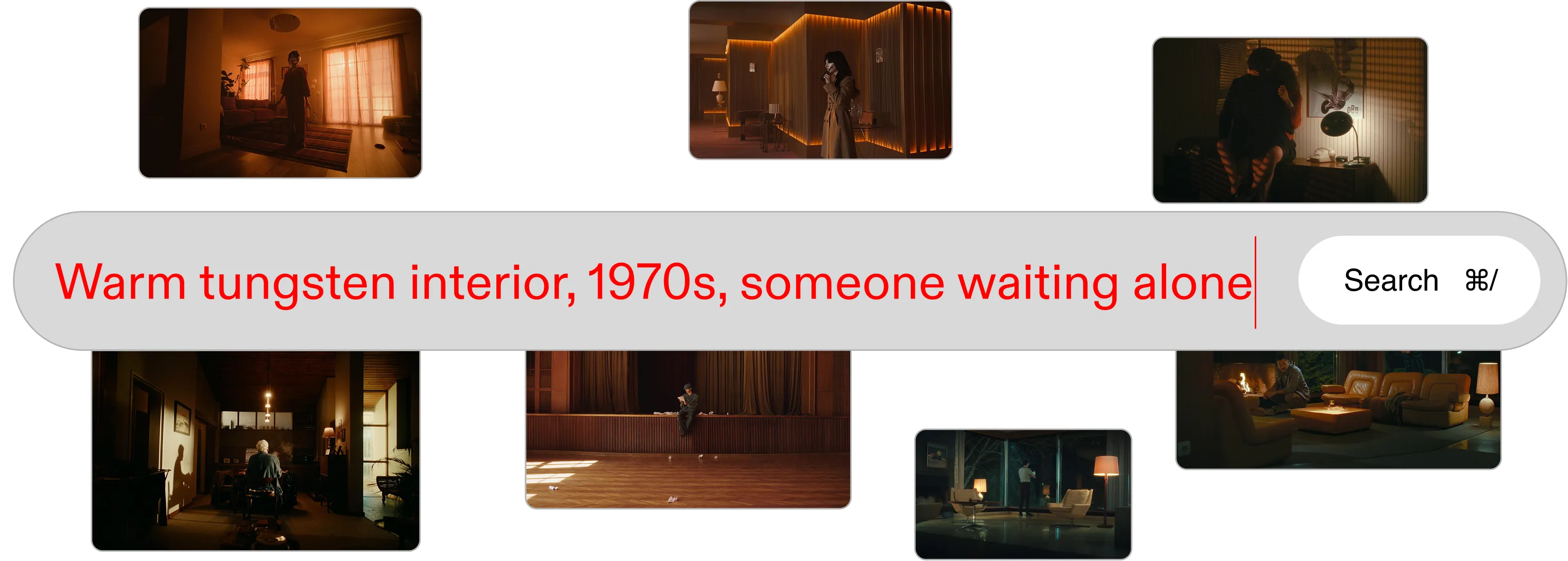
Flim opens on over 2 million references from films, TV series, ads and music videos, with stills from more than 7,000 films. The film stills sit next to campaigns and music videos, because a brief often needs both. Every frame is hand-selected by a curation team.
AI Search by mood, light and colour
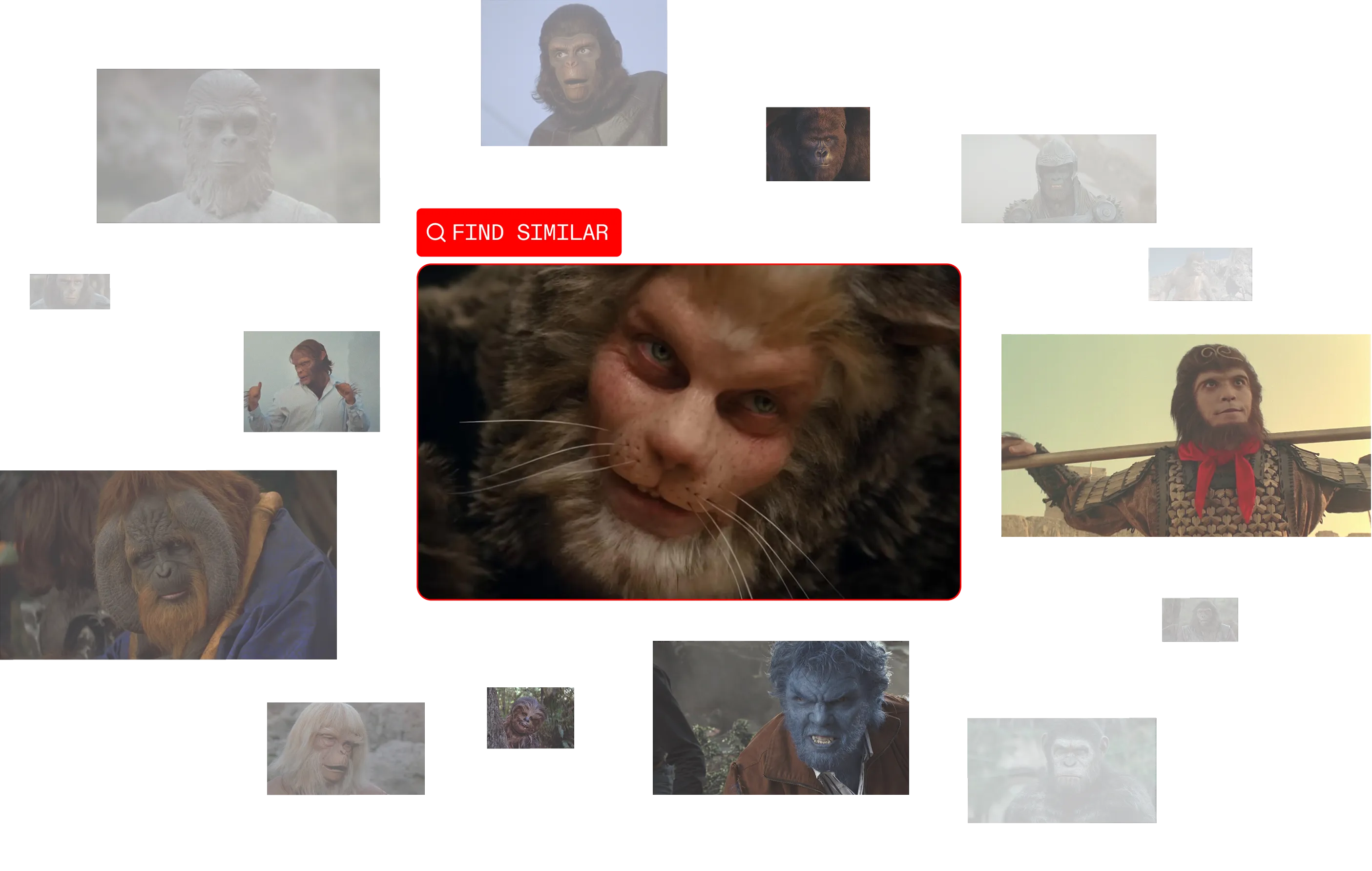
You don't need to know which film holds the shot. Type "golden hour on a motorway, 1970s, someone leaving" and AI Search reads the visual meaning of the words. The visual search engine adds 11 cumulative filters, from Ratio to Color & lighting, and Reverse Image Search: drop in the image your client already approved and find its neighbours.
Full credits on every frame
A reference saved from a random tab often loses its source. On Flim, every frame carries its credits: director, director of photography, production house and release date. You know where a reference comes from before you put it in front of a client.
575,000 video cuts from ads and music videos
Some briefs are about movement, not a still. The Pro plan adds 575,000 video cuts from ads and music videos, downloadable as MP4 or GIF.
When is Milanote still the better choice?
An honest Milanote alternative has to say where it stops. Milanote remains the better tool when you need to:
- Store your own images, PDFs and documents next to your notes.
- Plan a project with tasks, columns and writing templates.
- Bring together material that isn't visual reference at all.
Uploads in Flim Boards are coming soon. Until then, many teams search in Flim and keep their project notes in Milanote: find the frames, build the moodboard in Flim, and link to it from the project board.
How it works
Three steps from a feeling to a shared board.
Write the mood, the light, the era or the colour in plain words.
Stack 11 filters, run a Reverse Image Search, or search inside a single title.
Build a shared board, edit it with your team in real time, export it or open it in Canva.
Who uses Flim instead of, or alongside, Milanote?
- Art directors and agencies: moodboards for pitches, where the right reference wins the room.
- Directors and DOPs: treatments and lookbooks built from frames with their full credits.
- Designers: art direction for campaigns, packaging and brand worlds, drawn from cinema, ads and music videos.
For studios that work on the same boards, Flim for teams explains how teams use Flim together.
Go further
Got
Questions?

Not for organising your own files. Milanote is a flexible workspace for notes, images, links and documents. Flim is a visual reference search engine: you use it to find references in a library of over 2 million images from films, TV series, ads and music videos, then save and share them in Boards. Many teams use both.
Not yet. Uploads in Flim Boards are coming soon. Today, Boards collect references from the Flim library, and you can share them with a public link, edit them with your team in real time, export them or open them in Canva.
It depends on the job. To arrange your own files, notes and tasks, a board tool such as Milanote or Miro fits. To find the references that go into the moodboard, especially from cinema, ads and music videos, Flim is built for that, with AI Search by mood, light and colour.
Flim has a free plan with unlimited search, advanced filters, Reverse Image Search, public boards and one download per day, from 1080p to 2K.
Flim is a reference tool. Stills, video cuts and AI generations can be used for personal, educational and internal professional work such as moodboards, internal pitch decks and research. They are not royalty-free and should not appear in final client deliverables or campaigns.
Flim has a free plan. Basic costs €14.90 per month or €155 per year, and Pro costs €34.90 per month or €359 per year. Pro adds video cuts, Magic Board and AI generation.