How to write a treatment for film, ads and music videos
A treatment is a short document that shows what a project will be before anyone shoots it. For a film or series, it tells the story in present-tense prose. For an ad or a music video, it is the director's visual pitch, built on references. Both need a clear idea, a tone and images that prove it.
By the Flim team · Updated October 2026
A treatment is the document that turns a verbal pitch into something a producer, a client or an artist can actually see. Done well, it makes a project feel real before a single frame is shot. Done poorly, it reads as competent writing wrapped around vague, interchangeable imagery, and that gap is where pitches lose confidence. This guide covers both kinds of treatment: the story treatment that sells a film or a series, and the director's treatment that wins an ad or a music video. It ends with the part most guides skip: where the images come from.
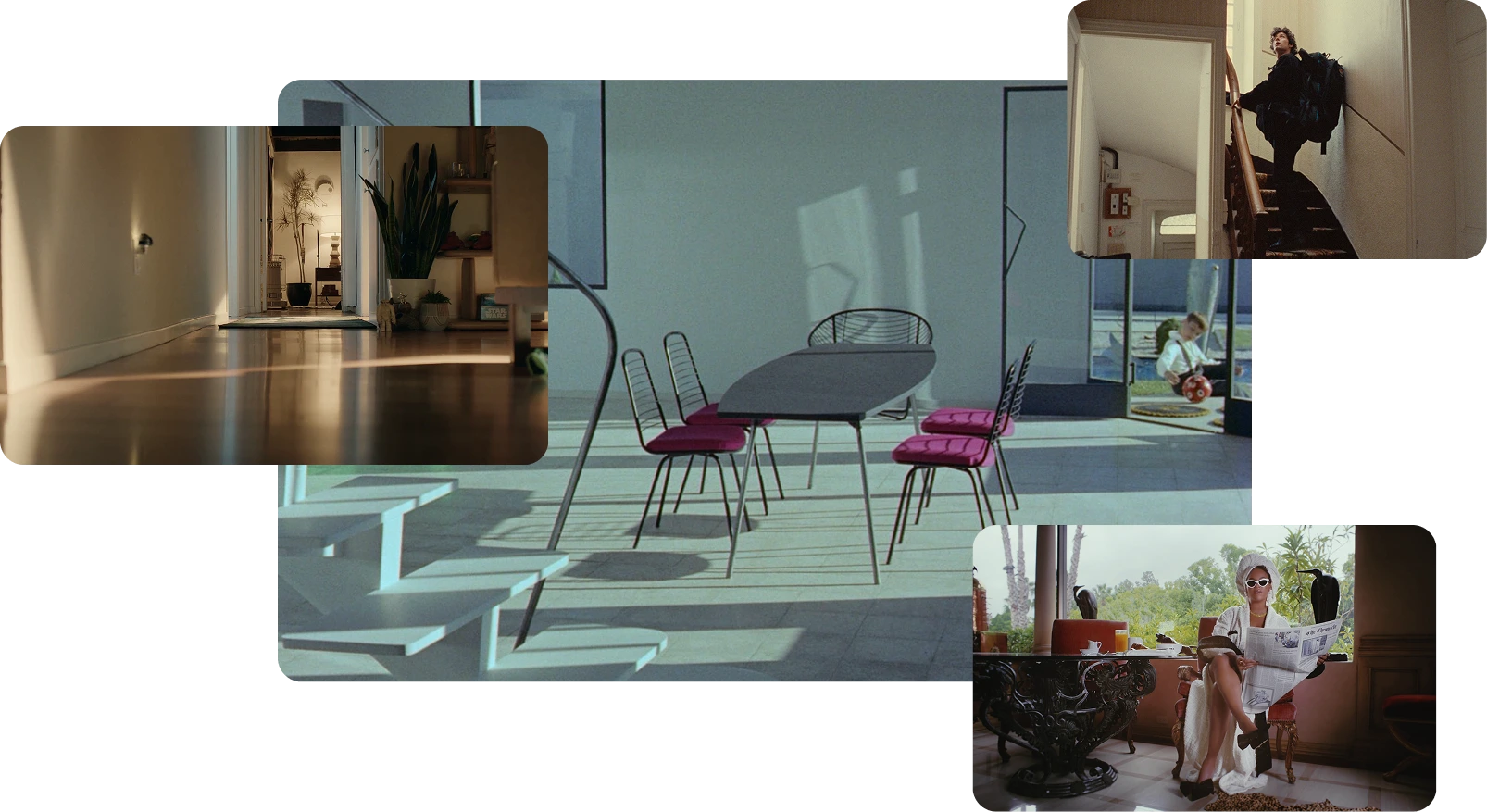
What is a treatment?
A treatment is the document you write before the script or the shoot, to make someone see and trust the project. The word covers two different documents, and knowing which one you are writing changes everything that follows.
Neither is a moodboard. A moodboard collects images around a feeling. A treatment makes an argument and uses images to prove it. A good cinematic moodboard is often the raw material a treatment is built from.
How do you write a film treatment?
A film treatment tells the whole story in prose, so a producer can judge it before a script exists. Write it in the present tense, as if the film were playing, with little or no dialogue.
1. Open with the logline. One sentence: who wants what, and what stands in the way.
2. Introduce the main characters. A few lines each: what they want, what they hide, how they change.
3. Lay out the structure. Setup, confrontation, resolution, with the turning points that move the story from one act to the next.
4. Name the tone and the theme. Is it a thriller played cold or a comedy played warm? What is it really about?
5. Tell the ending. A treatment is not a teaser. The reader needs to know how it lands.
Length depends on the format: roughly 2 to 5 pages for a short film, 5 to 20 for a feature and 8 to 15 for a TV pilot, according to StudioBinder.
How do you write a director's treatment?
A director's treatment has one job: make a client, a producer or a department head see and trust the vision before production begins. Not describe it, show it. The written sections set context, but the references do most of the persuading. A line like "warm, intimate, slightly nostalgic" means very little until it is anchored to a frame that shows exactly what warm and intimate look like on screen.
The most common failure is not bad writing. It is a well-written treatment paired with generic or loosely related imagery. The prose reads as confident, the references read as undecided, and the reader notices the mismatch even when they cannot say why the deck feels unconvincing.
Define the visual language first
Before motion or sound, establish what the world looks like. This section does the heaviest lifting, and it works better broken into distinct parts than as one loose moodboard:
- Setting and environment: locations, set design and key props.
- Time and context: season, time of day, the cultural references that anchor the atmosphere.
- Character design: costume, makeup and hair, the visual identity of the people on screen.
- Lighting and cinematography: hard or soft light, naturalistic or stylized, where the shadow falls.
- Textures and materials: fabrics and surfaces that make a frame feel tactile rather than flat.
- Color palette and grading: the emotional register of the colors, carried through to the final look.
Each one is a different search. Treating them as one undifferentiated board usually produces a section that looks pleasant but answers none of the six questions clearly.
Bring the vision to life with motion
Stills have a ceiling. A still can show a lighting setup or a palette, but not how the camera moves through a space, how light shifts over a scene or the rhythm a sequence is meant to have. Short clips next to the stills close that gap. Motion references are useful for four things: camera movement, lighting intentions, emotional beats carried by gesture, and the cutting rhythm, from long takes to a jump cut.
Add depth with sound design
A treatment that addresses sound proves the project has been thought through end to end. Music references should carry the emotional register, not just a genre: a reference track says more about pacing than a one-word label. Sound design covers the ambience, the effects and the quality of silence. Tone adapts to the project: a commercial leans toward polished, brand-consistent textures, a documentary toward raw environments. A short note under each reference, why this track, what this texture does, keeps it from reading as filler.
A treatment that only shows stills is making half an argument. Camera movement, lighting shifts, and rhythm are part of the vision too, they just don't fit inside a single frame.
How do you write a music video treatment?
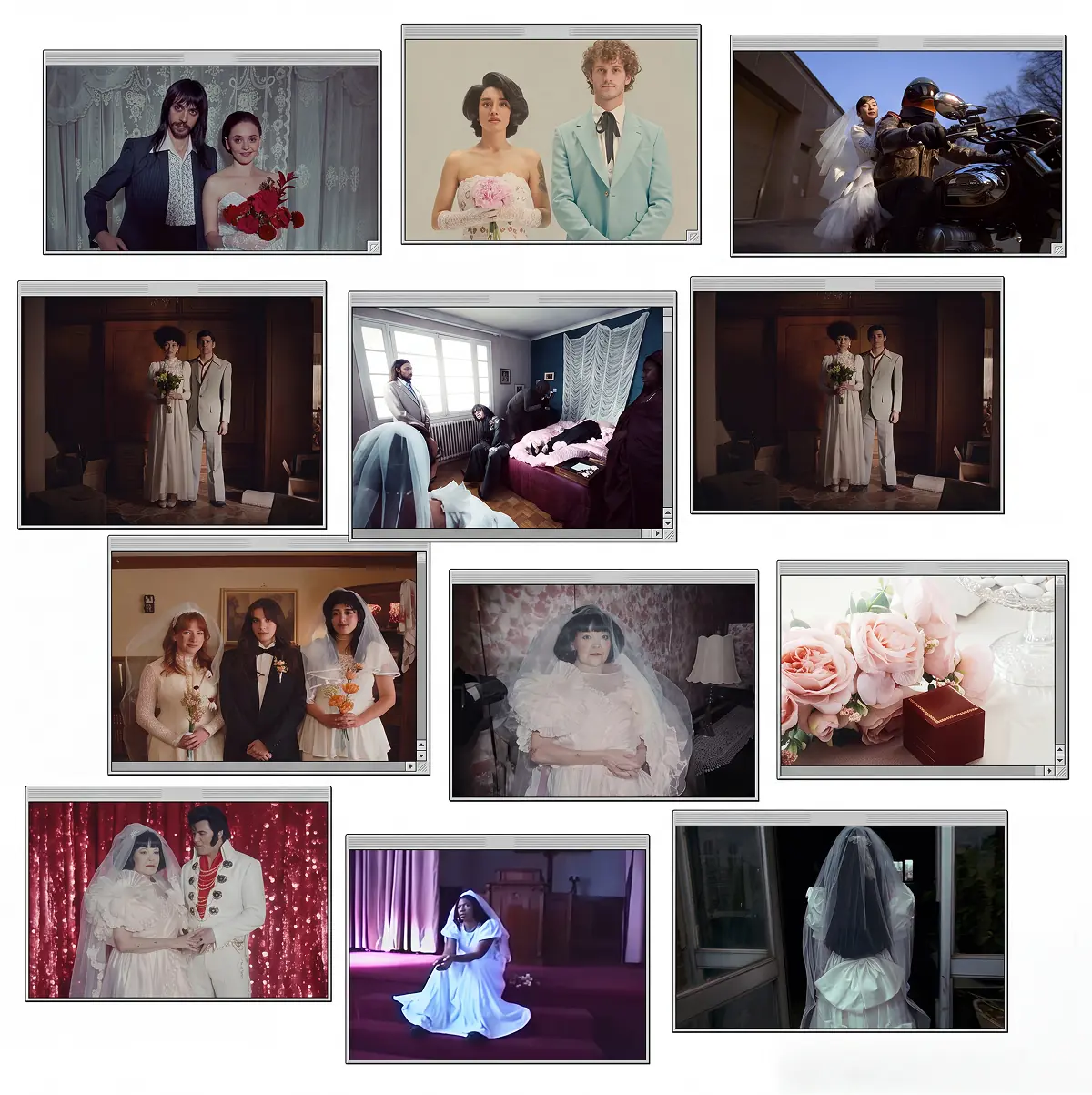
A music video treatment is a director's treatment built around a song, and the song sets the structure: its build, its breaks, its chorus. Start by listening on repeat and mapping what the image should do at each moment.
1. Title page: artist, song, director and production company.
2. The concept in one line: the idea an artist can repeat to their label.
3. Scene breakdown: what happens, verse by verse, in descriptive language.
4. Chapters: casting, camera, editing, styling, locations, each with its references.
5. Close: a short personal note and your contact details.
The references matter even more here than in an ad: artists and labels judge with their eyes first. Most current music video language lives in other music videos, which is where to look next.
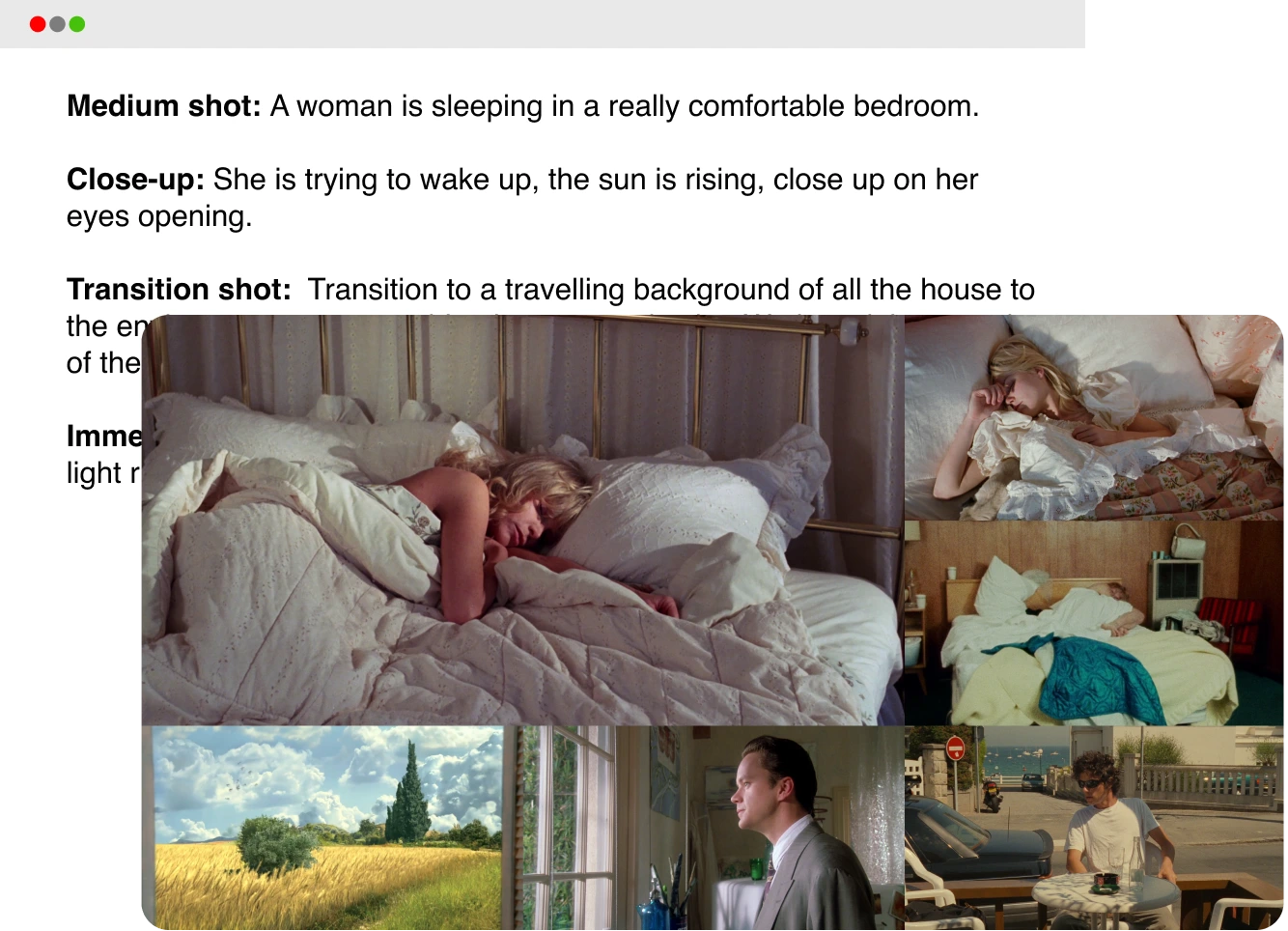
Where do you find visual references for a treatment?
Finding visual references for a treatment is where most of the time goes. A few keywords on Google Images return the same heavily circulated frames that appear in every other deck, the opposite of what a treatment needs: specificity, not familiarity.
- Search by description, not by title. AI Search understands mood, light, era and framing in natural language. Filters then narrow the pool: Type (movies, ads, music videos, TV series, documentaries), Frame size, Release year, Color & lighting, Motion and more.
- Add motion. Video Cuts are short clips from music videos and commercials, alongside the film stills library.
- Skip the blank page. Magic Board, on the Pro plan, turns a script or a pitch into a chronological sequence of 25 to 100 images that follows the story. Regenerate gives another reading of the same text. It accelerates the search, it does not replace it: refine the board with AI Search once the direction is on the table.
- Lay it out. Flim in Canva, on the Basic and Pro plans, brings your Boards into Canva in one click, with treatment templates for an ad campaign, a music video and a short film.
For a dedicated workspace, see the director treatment tool. One rule applies to every reference: it is there to pitch and to prepare the shoot, not to appear in the final client deliverable.

Got
Questions?

A film treatment is a prose summary of a film or series, written in the present tense, that tells the whole story from beginning to end before the script exists. It is used to develop the story and to pitch it to producers and financiers.
It depends on the format. A story treatment usually runs 2 to 5 pages for a short film, 5 to 20 for a feature and 8 to 15 for a TV pilot. A director's treatment for an ad or a music video is mostly images, with just enough text to explain each choice.
A film treatment tells the story in prose, so a producer can judge the narrative. A director's treatment shows how an ad or a music video will look and feel, so a client or an artist can judge the vision. The first is mostly text, the second is mostly references.
A title page with the artist, the song and the director, a one-line concept, a scene breakdown that follows the song, then short chapters on casting, camera, editing, styling and locations, each with visual references. It ends with contact details.
A moodboard collects images around a feeling. A treatment makes an argument: it explains the idea, then uses references to prove each choice. A good moodboard is often the raw material a treatment is built from.
Stills can show a light, a palette or a composition. Only motion shows camera movement, a light that shifts over a scene or the rhythm of the edit. For an ad or a music video, a few short clips next to the stills usually make the treatment far more convincing.